How to read a dilution percentage is on Aroma Science.
If lavender is often called the mother of essential oils, Jojoba Oil is one of the carriers that matters most.
In the humid weather of Hong Kong and Taiwan, many people hesitate at the word oil. Golden jojoba is an exception: it feels light and breathable, and it is often called liquid gold. Here is why it is used so widely, and how the classic blends are put together.
1. It is not an oil. It is a liquid wax
The name says oil, but the chemistry says liquid wax.
It is pressed from the seeds of a desert shrub. Helen McGuinness notes that its molecules line up much like human sebum, so it sits well on skin. That is why it is called a biomimetic sebum.
Why golden?
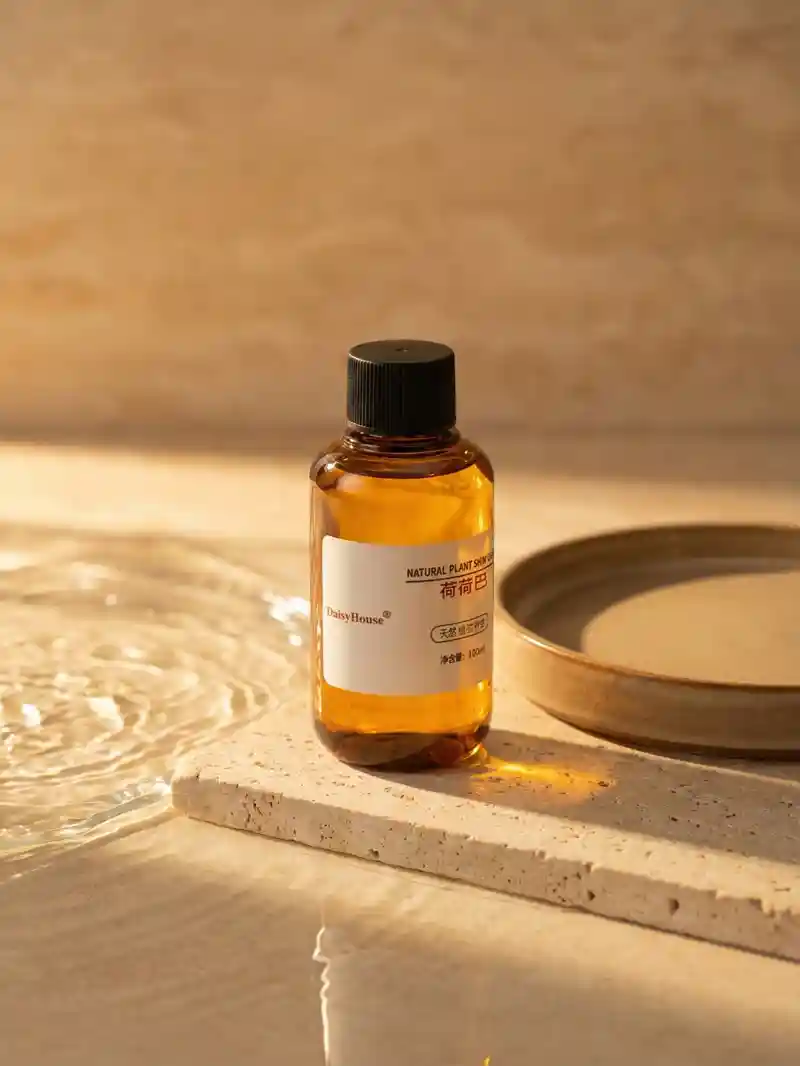
Some jojoba on the market is clear. That is a decolorized, refined oil. Golden jojoba is cold-pressed and unrefined in colour. It keeps the natural wax, protein, minerals, and vitamin E, and it looks gold.
2. Why it suits skin in a humid climate
1. Oil that helps balance oil
Anne Kennedy, in Aromatherapy for Beginners, singles it out for acne and very oily skin.
- Why: the structure is so close to sebum that skin can read it as “enough oil,” and ease its own output. It also helps dissolve hardened sebum in pores.
2. Very stable
Patricia Davis writes that jojoba is unusually stable and does not oxidise the way many plant oils do. It can be added to oils that spoil more easily, as a natural antioxidant, to lengthen their life.
3. It holds water
Helen McGuinness describes a wax fraction that behaves a little like collagen, plus vitamin E. Together they leave a breathable film that holds moisture — useful in air-conditioning and when the season changes.
3. Three classic blends (with sources)
A bottle of golden jojoba is not only a makeup remover. These blends come from aromatherapy books.
Blend 1: Rich Body Massage Oil
- Who: dry or dull skin, or a full-body massage when you want depth.
- Source: The Complete Book of Essential Oils and Aromatherapy, Valerie Ann Worwood (Page 200)
Carriers:
- Avocado oil: 10ml
- Evening Primrose oil: 5ml
- Jojoba oil: 10ml
- Rosehip seed oil: 5ml
- Almond oil: 75ml
How: blend the plant oils as the carrier. Essential oils may be added at about 2%–3% of the total (lavender or geranium, for example). Jojoba’s slip meets the richness of avocado.
Blend 2: Day Care Oil for Normal to Oily Skin
- Who: a shiny T-zone, visible pores, or the occasional spot on combination or oily skin.
- Source: The Complete Book of Essential Oils and Aromatherapy, Valerie Ann Worwood (Page 226)
Essential oils:
- Juniper berry: 8 drops
- Geranium: 10 drops
- Petitgrain: 10 drops
- Rosemary: 2 drops
How to mix:
- Blend those essential oils first.
- Use jojoba or Sunflower oil as the carrier.
- In each 5ml (about 1 teaspoon) of jojoba, add 2–3 drops of the blend.
- Ten drops of carrot infused oil may be added for antioxidants. Press onto slightly damp skin after cleansing. It absorbs quickly.
Blend 3: Cuticle Softener
- Who: frequent manicures, hangnails, or hardened skin around the nail.
- Source: The Complete Book of Essential Oils and Aromatherapy, Valerie Ann Worwood (Page 257)
- Jojoba oil: 10 drops
- Camellia seed oil: 5 drops
- Olive squalane: 10 drops
- Ho wood essential oil: 2 drops
How: mix in a small roll-on and apply along the nail edge. Jojoba softens that skin quickly.
Close
Golden jojoba stays in use in Hong Kong and Taiwan because it nourishes without a greasy film, which fits humid weather.
It can help oily skin balance its own oil, and it can sit on dry skin as a moisture film. If oil-care is new, this gold liquid wax is a sound first bottle.