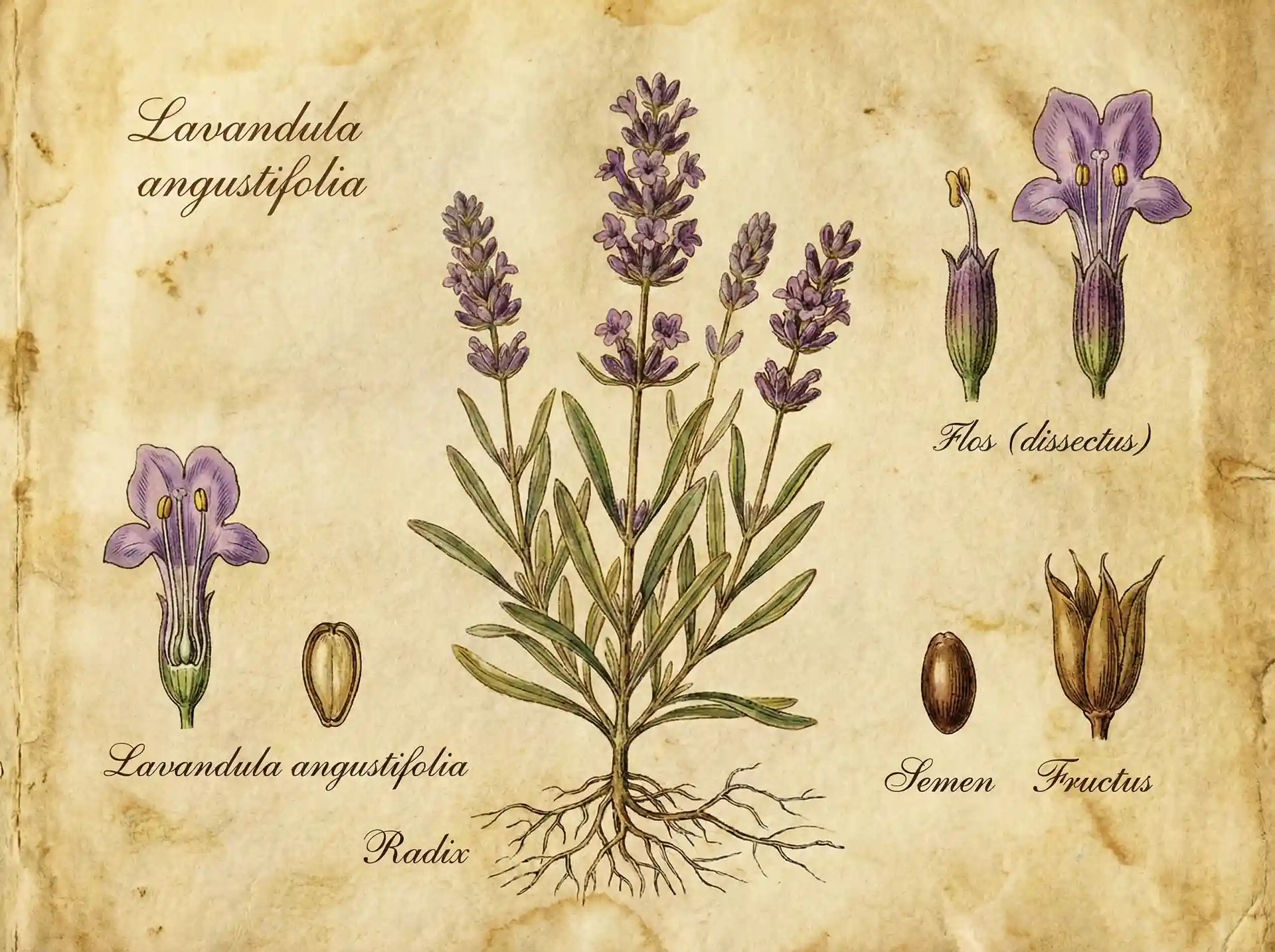
Profile
- Latin name:Lavandula angustifolia
- Family:Lamiaceae / mint family
- Extraction:low-temperature distillation
- Note:middle to high
Before use, see where dilution percentages, phototoxicity notes, and notes for children or pregnancy belong. Aroma science.
Opening scene
When the last noise of the day finally settles and the city’s light blurs beyond the window, you come home with a tired body. Unfinished work and tangled thoughts are still circling. Then a faint scent spreads, soft and lingering, like a violet dream unfolding across the mind.
That is the strength of lavender.
Lavender may call up endless purple fields in Provence, or the drop on the pillow that promises a good night. If that were all it could do, we would be underestimating this gentle all-rounder of aromatherapy. Today, meet this oldest friend again.
Then and now: a purple fragrance across a thousand years
The name lavender comes from the Latin lavare, “to wash.” In ancient Rome people already put it in the bath, not only for the scent but for the sense of cleansing body and mind. Even Elizabeth I is said to have favoured it, using it to scent rooms and sometimes adding a few flowers to tea. That purple long ago left the status of a mere plant and became a cultural sign of grace and healing.
A familiar embrace: guardian of sweet sleep
We know lavender helps sleep. How does the “sleep spell” actually work?
The secret sits in linalool (Linalool) and linalyl acetate (Linalyl Acetate). Think of them as two gentle messengers of sleep. Through smell they reach the emotional centres of the brain and send a clear signal: it is time to rest. They do not switch the mind off by force. They are more like hands unknotting a ball of thread, easing tension and slowing racing thoughts, so you drift, like a small boat on quiet water, into a still harbour.
A sleep ritual under moonlight
- A better pillow mist: make a “good-night spray.” Fill a 30ml spray bottle with pure water or witch-hazel hydrosol, add 10–15 drops of lavender essential oil, shake before bed, and mist pillow and sheets lightly so the room holds a purple dream.
- A deep bath: put 8–10 drops of lavender into a spoon of honey or a small cup of milk (as an emulsifier), then pour it into a warm bath. Close your eyes and soak for 15–20 minutes, letting water and scent carry the day away.
- A warm foot massage: blend 1 drop of lavender with 5ml of sweet almond oil or coconut oil and massage the feet before sleep, especially the Yongquan point in the sole. It supports circulation and sends a calming note from the feet through the body.
An unexpected kiss: a gentle first-aid box for skin
Lavender’s gentleness is not only for the mind. It also looks after skin. Its reputation for renewal and calming inflamed skin makes it a staple of the household box.
After-sun care in summer
Too much sun, skin red and hot? Lavender is a good “cooler.”
Blend: add 10 drops of lavender to 50g of aloe gel, stir, chill in the refrigerator for 10 minutes, then apply a generous layer to sun-exposed skin. The cool feel eases the heat at once and supports the skin’s own repair.
Small everyday mishaps
A paper cut, or a small kitchen burn? After cleaning the area, take a cotton swab with one drop of diluted lavender (1 drop of essential oil + 1ml of carrier oil) and touch it lightly on the spot. It can help calm, ease discomfort, and support healing with less chance of a mark.
A whisper of the soul: a reset for mood
When pressure leaves you short of breath and anxiety will not let you sit still, lavender does not shout. It whispers. It is like a warm hand on the shoulder at the moment you need it, or a silent “it is all right” when you are close to breaking.
Its scent can help the brain lower the stress hormone cortisol, so that in the noise you can breathe deeply and find order and quiet again.
A pocket pause button
- Aroma necklace or bracelet: place 1 drop of lavender on a lava-stone bracelet or an aroma pendant, and let that steady scent stay with you through the day.
- A small quiet space on the desk: put one drop on a tissue or a piece of aroma wood beside the computer. When the load feels heavy, close your eyes, lean in, and breathe three times. Give yourself one minute of leave.
A quiet note from the small cosmos
- Choose the right lavender: the oil most used in aromatherapy is true lavender (Lavandula angustifolia), also called narrow-leaved lavender, and it is the most settling. Spike lavender is more alerting, and the hybrid lavandin suits household products better. Check the Latin name when you buy.
- Safety first: lavender is very gentle, yet on sensitive skin or for children it is still wise to dilute it in a carrier oil. Test on the inner arm before use.
A small bottle of lavender holds more than a scent. It holds the quiet of moonlit fields, an old wisdom of care, and a gentleness that can meet you whenever you need it.