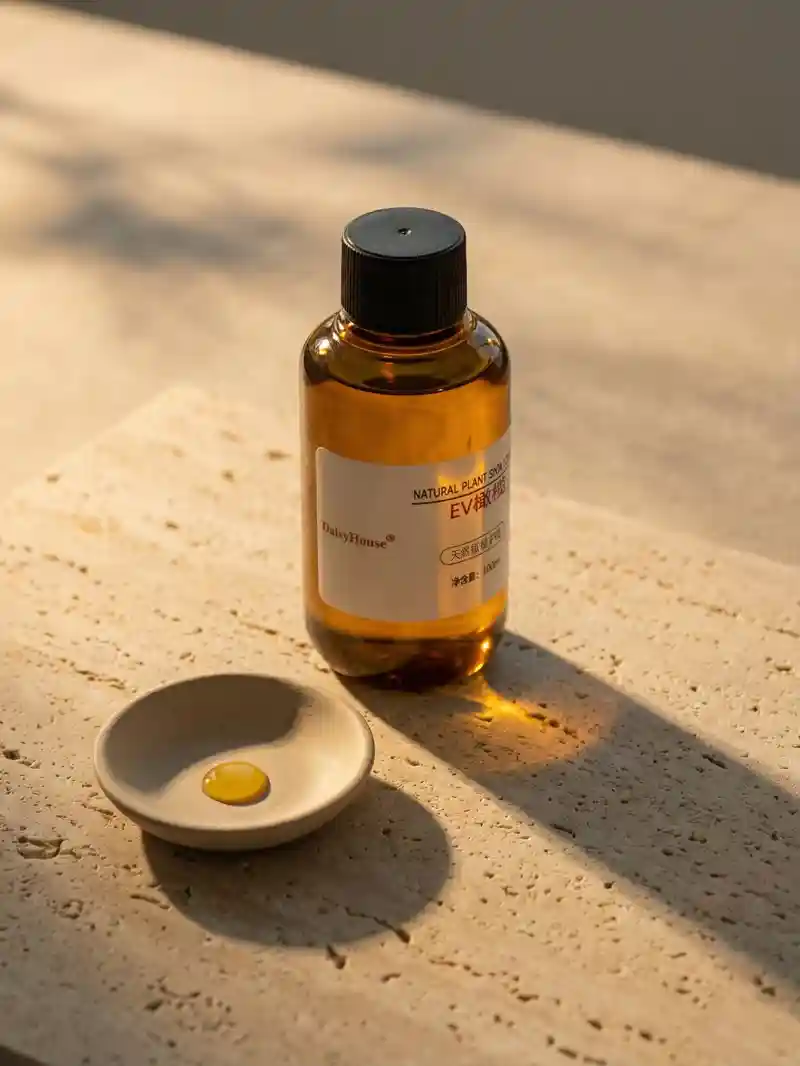
How to read a dilution percentage is on Aroma Science.
Many people know olive oil (Olive Oil) as a cooking oil. In aromatherapy it is one of the oldest and richest carriers.
Valerie Ann Worwood describes it as nourishing, regenerative, and protective. When skin itches at the change of season, or the body is very short of water in the skin, this green oil gives an occlusive repair that thinner oils do not match.
1. Why extra virgin?
Aromatherapy looks for Cold-pressed Virgin Olive Oil. It keeps a fuller share of vitamins E and K, and of squalene. The colour is deep green or gold-green. The scent is strong, and that strength is a sign the nutrients are still there.
2. How it is used in a humid climate
- Very dry skin: for skin dried out by air-conditioning, the high oleic content can feed it deeply.
- Hair: a simple natural mask for damaged hair.
- Rheumatic comfort and circulation: Patricia Davis notes that olive oil is often used in massage for rheumatism, arthritis, and poor circulation.
3. Two classic blends (with sources)
Blend 1: a rich oil for nails and hands
- Who: dry cuticles, hangnails, rough hands.
- Source: The Complete Book of Essential Oils and Aromatherapy, Valerie Ann Worwood (Page 497)
- Olive oil: 30% - 50% (as part of a carrier blend)
- Mixed with a lighter carrier, such as sweet almond oil.
- Note: olive oil suits skin that is dry, itchy, or cracked.
Blend 2: a massage oil for aching joints
- Who: joint ache in damp cold weather, and older people who want a rheumatic massage.
- Source: after Patricia Davis, Aromatherapy An A-Z (Page 284)
- Carrier: Olive Oil 30ml
- Essential oils: Rosemary 5 drops + Juniper 5 drops + Lavender 5 drops.
- How: olive oil feels warming. Massaged into joints with those oils, it supports circulation and eases discomfort.