How to read a dilution percentage is on Aroma Science.
If a heavy oil is unwelcome, but you still want to care for skin with oil, Squalane is the quieter choice.
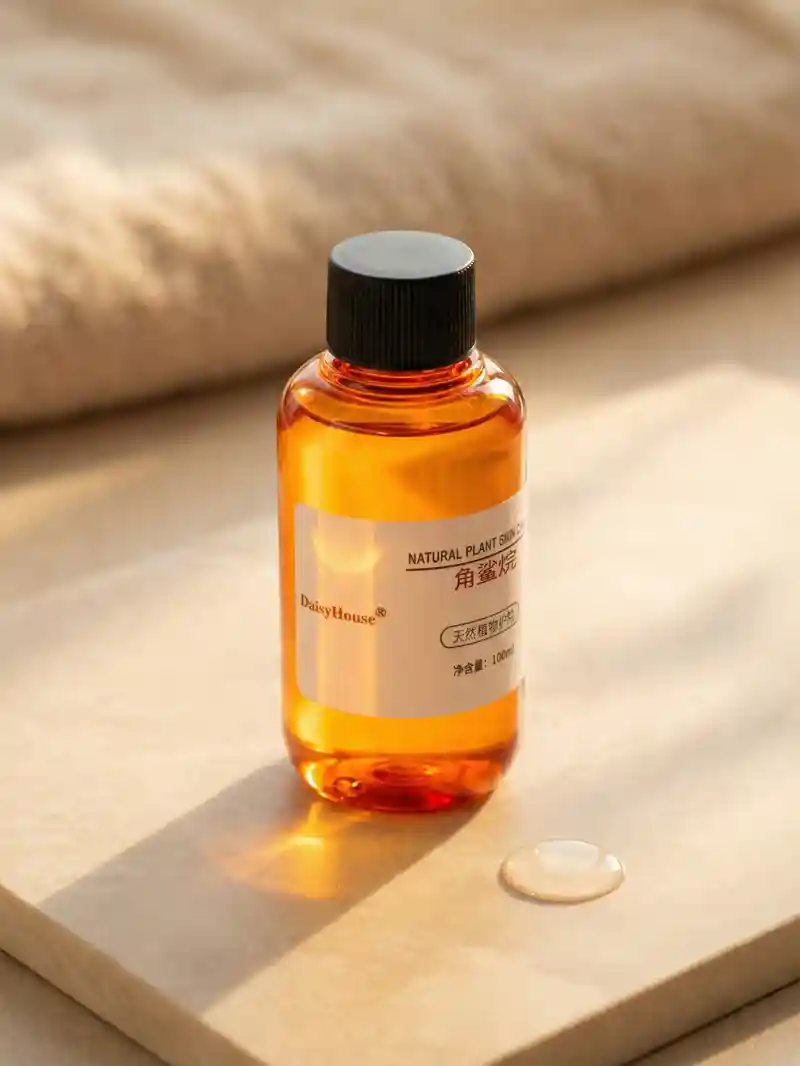
Strictly, aromatherapy uses Olive Squalane, usually drawn from olive. Valerie Ann Worwood praises a molecular structure very close to the skin’s own lipid film, so it absorbs quickly. It is sometimes called an oil that is not an oil.
1. Why it absorbs quickly
Squalane is an organic lipid. It can stand in for the skin’s own moisture barrier. It does not sit on the surface the way some plant oils do. It moves in and leaves a silky feel rather than a greasy one. In the humid weather of Hong Kong and Taiwan, that makes a comfortable base.
2. What it does
- Barrier: suited to damaged or sensitive skin.
- Antioxidant: it helps the skin meet what the environment throws at it.
- Flexible: it can be used at 100%, or as the base of a facial oil.
3. Two classic blends (with sources)
Blend 1: Luxury Facial Serum
- Who: mature skin that wants repair and a slower look of ageing.
- Source: The Complete Book of Essential Oils and Aromatherapy, Valerie Ann Worwood (Page 297)
- Camellia seed oil: 15ml
- Avocado oil: 5ml
- Argan oil: 10ml
- Olive squalane: 5ml
- Rosehip seed oil: 20 drops
- Sea buckthorn oil: 10 drops
- How: blend and use as a night serum. Squalane is there for slip and a silky feel.
Blend 2: a plain oil for sensitive skin
- Who: skin that reacts when the season changes, flushes easily, or should not carry a long routine.
- Source: after Valerie Ann Worwood on squalane (Page 498)
- Olive squalane: may be used at 100%.
- How: after cleansing, while the toner is still damp, press 2–3 drops over the face. It stands in for skin lipids and helps a damaged barrier. A steady moisturiser for sensitive skin.